
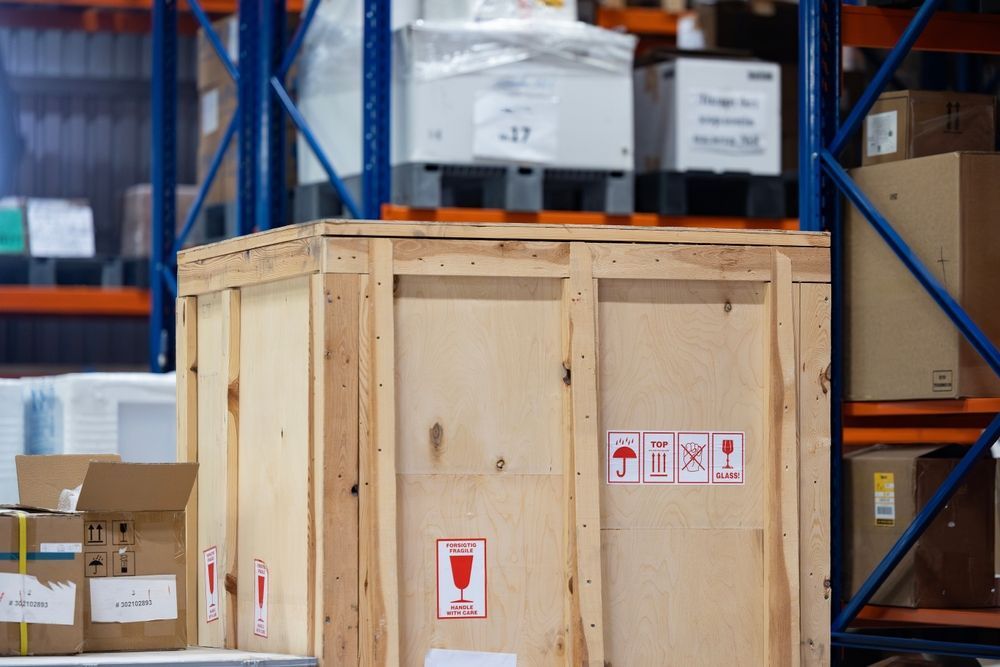
Protection Built for Items That Cannot Afford Damage
Crating Services in Victoria for fragile, high-value, or unusually shaped items that standard packing materials cannot adequately protect
A standard moving box handles most household goods reliably, but certain items present dimensions, weights, or fragility levels that cardboard and bubble wrap simply cannot address. Armstrong Warehouse & Transfer provides crating services for household and commercial items that need rigid, customized containment before they are packed, loaded, stored, or shipped over long distances. The decision to crate rather than standard-pack comes down to two factors: the item's susceptibility to impact or compression, and the conditions it will face during transport or storage.
Crating is built around the specific item rather than a generic container size. Artwork, antiques, mirrors, large electronics, machinery components, glass-topped furniture, and oversized commercial fixtures all present different structural challenges. A crate designed for a framed painting distributes pressure differently than one built for a stone countertop or a custom-fabricated fixture. During long-distance moves or extended storage periods—conditions common when relocating between Victoria and Houston, San Antonio, or Corpus Christi—purpose-built crating keeps items stable across multiple load and unload cycles.
Describe the specific items you need crated so Armstrong Warehouse & Transfer can determine the appropriate preparation before your move or shipment.

How Crating Addresses Items Standard Methods Cannot
The crating process begins with evaluating the item's dimensions, weight distribution, and structural vulnerabilities. From there, the crate is built to hold the item securely without relying on the item itself to bear load. Interior bracing, cushioning, and fastening methods vary based on what's being protected—a delicate antique requires a different internal configuration than a dense piece of commercial equipment. This evaluation step is what separates effective crating from simply placing something in a larger box.
Once crated, clients can see an immediate difference in how items are handled during loading and transport. A properly built crate can be moved with standard equipment, stacked safely when dimensions allow, and stored without the item shifting inside during transit. Items that arrived at a prior home with cracks, scratches, or broken components from a previous move often remain in original condition when crated correctly from the start.
Crating integrates naturally with Armstrong's other services—items can be crated at the origin, stored at the warehouse if needed, and delivered as part of a residential move, commercial relocation, or long-distance shipment. Not every item in a move requires a crate, and part of the consultation process involves identifying which pieces justify the added preparation based on their value, fragility, and the conditions of the move itself.
What to Know Before Requesting Crating
Customers asking about crating typically want to know how the process works and whether their specific items qualify. These answers cover the most common points of clarification.
What kinds of items are typically crated?
Artwork, mirrors, antiques, large electronics, stone or glass surfaces, unusual furniture configurations, and commercial fixtures are common candidates—essentially any item where standard box packing would leave it exposed to impact or shifting.
How is a crate sized and built for a specific item?
The crate is measured and constructed around the item's actual dimensions, with interior bracing added to prevent movement and cushioning chosen based on the item's surface material and fragility.
Why does crating matter for long-distance moves?
Routes between Victoria and cities like Houston or San Antonio involve extended road time, loading at multiple points, and temperature variation—conditions that increase stress on improperly packed items over the duration of the haul.
When should crating be arranged during the moving process?
Crating is ideally planned before the broader packing process begins, so the crated items can be moved in sequence without disrupting the overall loading schedule.
How does crating work alongside storage?
Items can be crated and placed directly into warehouse storage at Armstrong Warehouse & Transfer, remaining in their crates until delivery is scheduled, which protects them throughout both the storage and transit phases.
Armstrong Warehouse & Transfer can review your item list and identify which pieces require crating before your move date—call (361) 575-1485 to discuss what you're working with.